

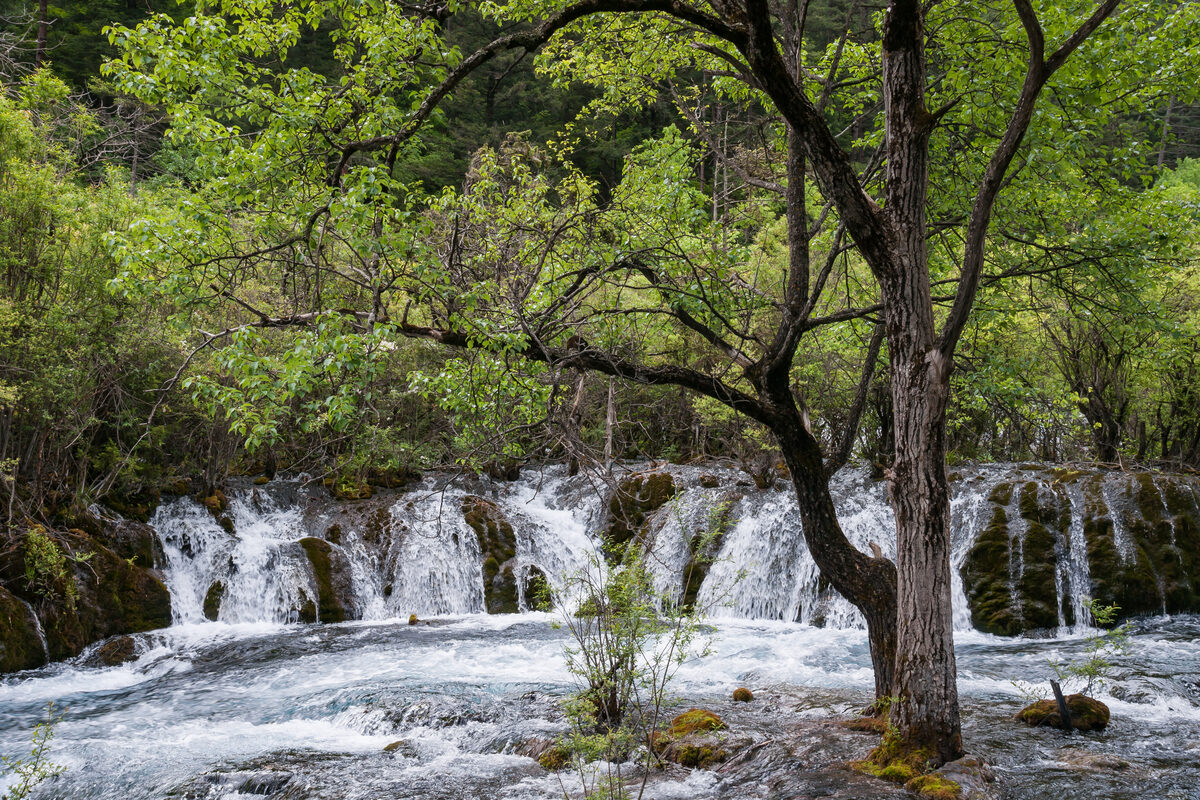
Sichuan
Magazine-style destination guide
Sichuan is a province of contrast and abundance, where snow-fed rivers cut through terraced farmland, dense bamboo forests shelter the giant panda, and the air itself carries the warming sting of Sichuan pepper. Beyond the bustle of Chengdu, the province folds open into a chain of UNESCO natural wonders: mineral-blue alpine lakes in Jiuzhaigou, golden travertine terraces at Huanglong, and the mist-wrapped Buddhist peaks of Mount Emei. Beneath that surface lies an older layer of human craft — the 2,000-year-old irrigation system at Dujiangyan that still waters the Chengdu Plain, and the strange, bronze-faced civilization of Sanxingdui that archaeologists are still piecing together.
This guide follows seven defining chapters of Sichuan, from the panda conservation campus in Chengdu to the surreal lakes of Jiuzhaigou, the calcified pools of Huanglong, the sacred summit of Mount Emei, the cliff-face Buddha of Leshan, the ancient waters of Dujiangyan, and the mystery-filled galleries of Sanxingdui.
01 · Living Symbol
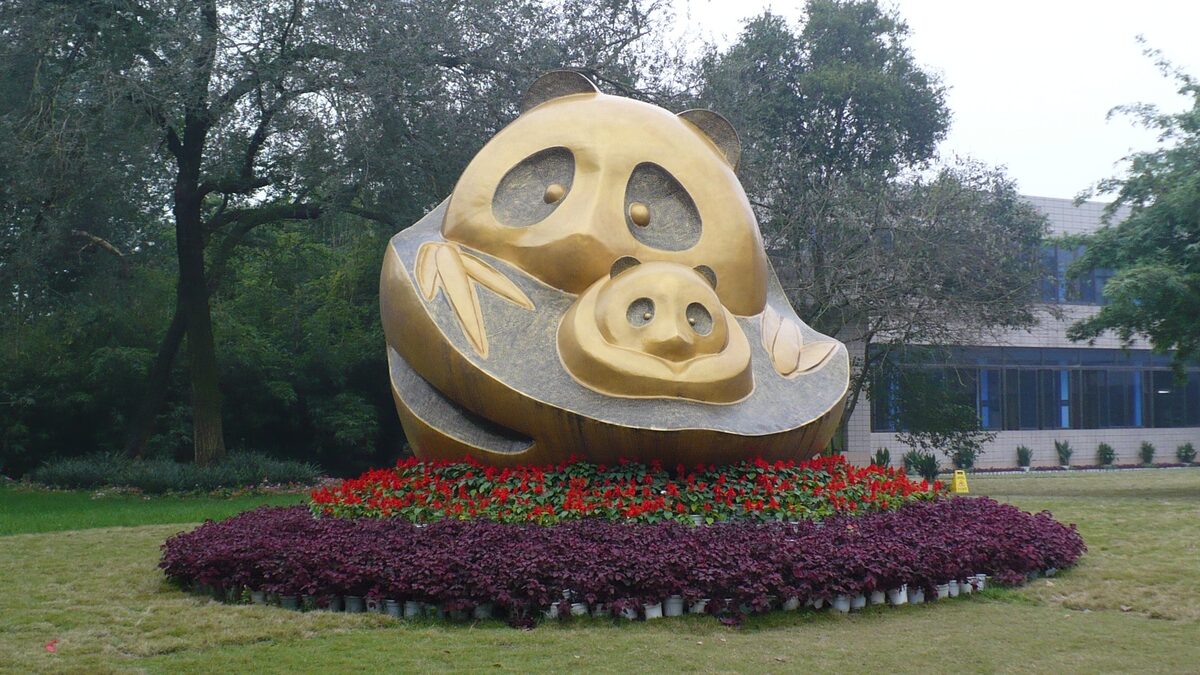
Chengdu Research Base of Giant Panda Breeding
成都大熊猫繁育研究基地
Overview: Established in 1987 on the northern outskirts of Chengdu, this research campus and conservation center has become the world’s most visited window into the world of the giant panda, holding the largest captive population of the species anywhere on Earth.
Highlights: Open-air enclosures arranged to mimic the panda’s natural bamboo-forest habitat; the nursery rooms where newborns the size of a stick of butter are bottle-fed and weighed; the “Sunshine Nursery” where the latest cubs are presented to the public; and a separate Red Panda enclosure tucked into a hillside bamboo grove.
Strategy: Aim to arrive at the gate at 7:30 AM, when the pandas are most active and being fed. Move first to the newer expansion area in the south, then return through the older enclosures in late morning. Avoid weekends and Chinese public holidays, when timed-entry tickets are hardest to secure.
02 · Painted Waters
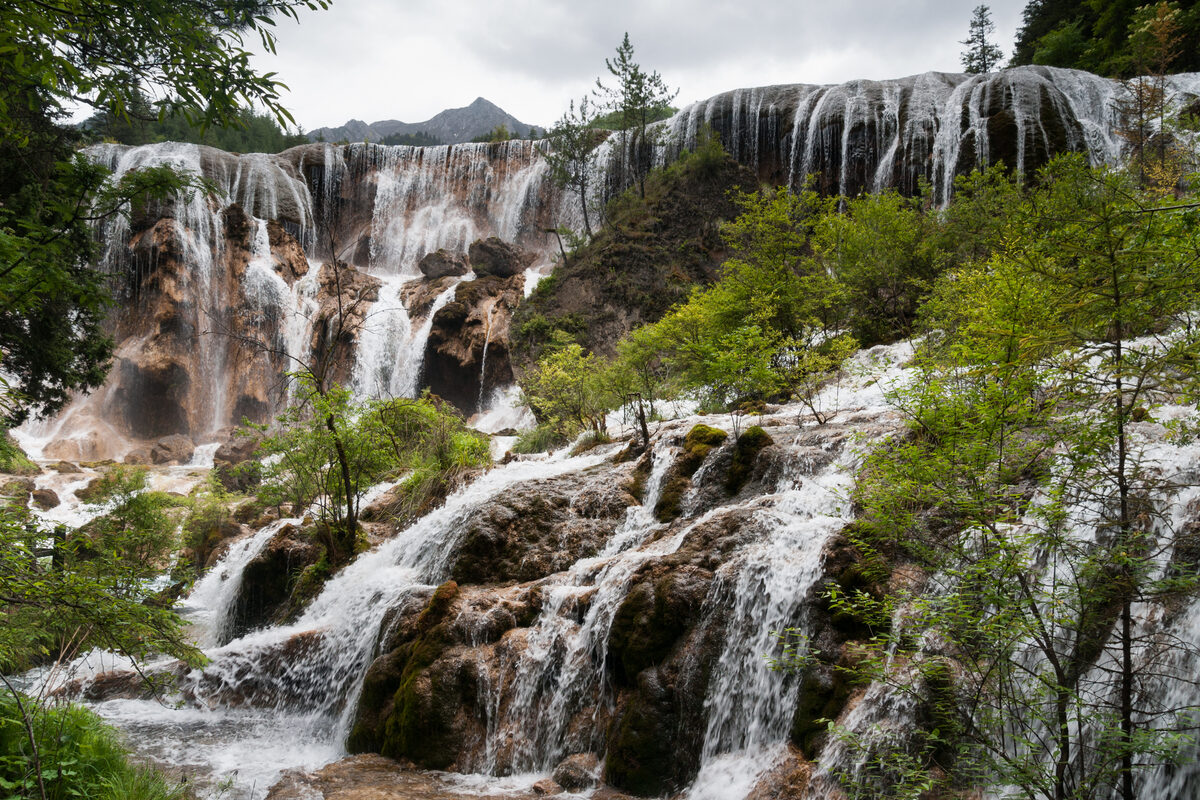
Jiuzhaigou Valley
九寨沟
Overview: A 72,000-hectare UNESCO World Heritage reserve in the Min Mountains of northern Sichuan, where more than 100 alpine lakes and a dozen travertine waterfalls are threaded through forests of spruce, birch, and maple at elevations between 2,000 and 4,500 meters.
Highlights: Five Flower Lake (Wuhua Hai) with its submerged calcified tree trunks; the 78-meter multi-tiered Nuorilang Falls, China’s widest travertine-topped waterfall; Long Lake, the highest and largest body of water in the park; and Shuzheng Lakes, a stair-stepped series of shallow basins separated by natural tufa dams.
Strategy: Take the park’s shuttle bus to the top of the valley in the morning and walk the boardwalks back downhill, allowing the shifting sunlight to deepen the lake colors through the day. Visit in late October for the autumn foliage, when the maples and birches turn the valley walls a blaze of amber and crimson.
03 · Calcite Cascade
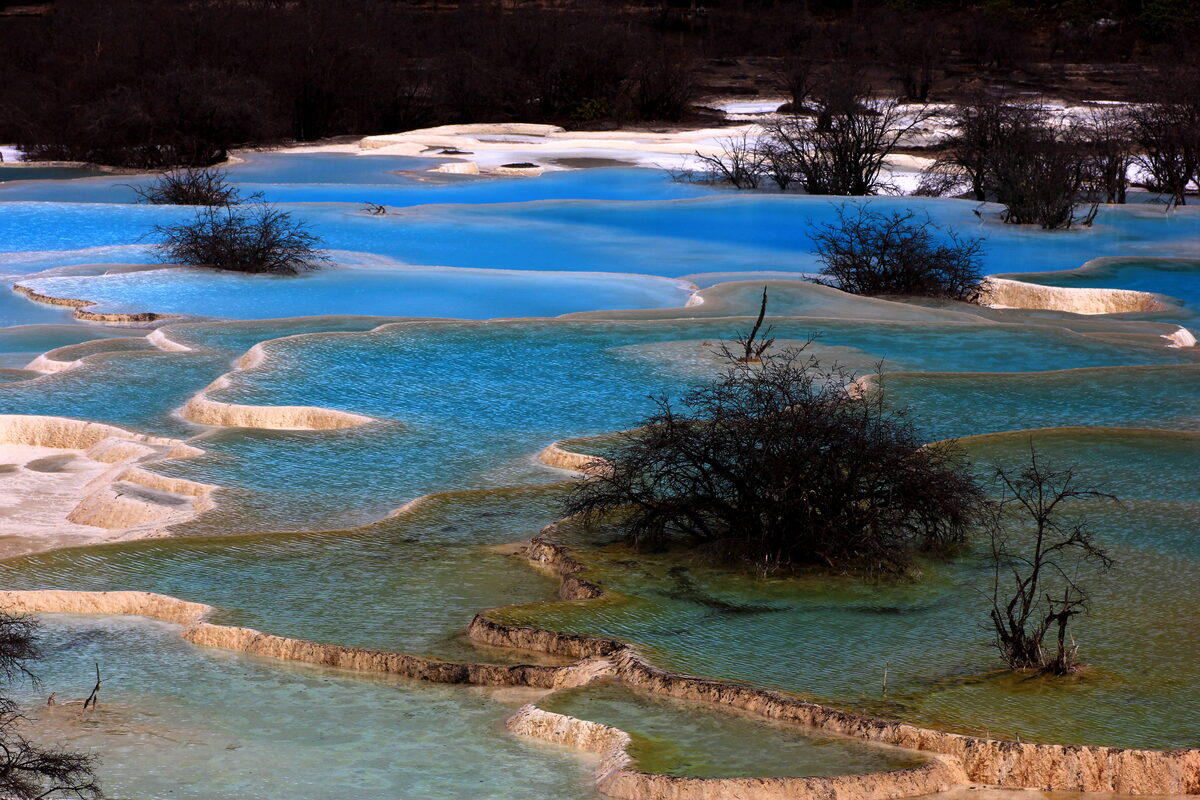
Huanglong Scenic and Historic Interest Area
黄龙
Overview: A 700-kilometer-square UNESCO World Heritage site perched between 3,100 and 3,600 meters in the southern Minshan range, where thousands of years of calcium carbonate deposition have built a 3.6-kilometer valley of travertine terraces, rimstone dams, and brilliantly colored pools.
Highlights: The Five-Color Pond (Wucai Chi), the highest and most vividly tinted pool of the valley; the 2,500-meter-long Golden Sand Field, a calcified riverbed that appears to flow like a sheet of polished brass; the ancient Huanglong Temple at the valley’s source; and translucent travertine curtains where water spills from one turquoise basin into the next.
Tip: The park sits at high elevation, so plan to spend a night in nearby Chuanzhusi or Songpan before ascending. Wear grip-soled shoes — wet travertine is slippery — and allow at least four hours, as the full valley traverses 7 kilometers of boardwalk.
04 · Sacred Summit
Mount Emei (Emei Shan)
峨眉山
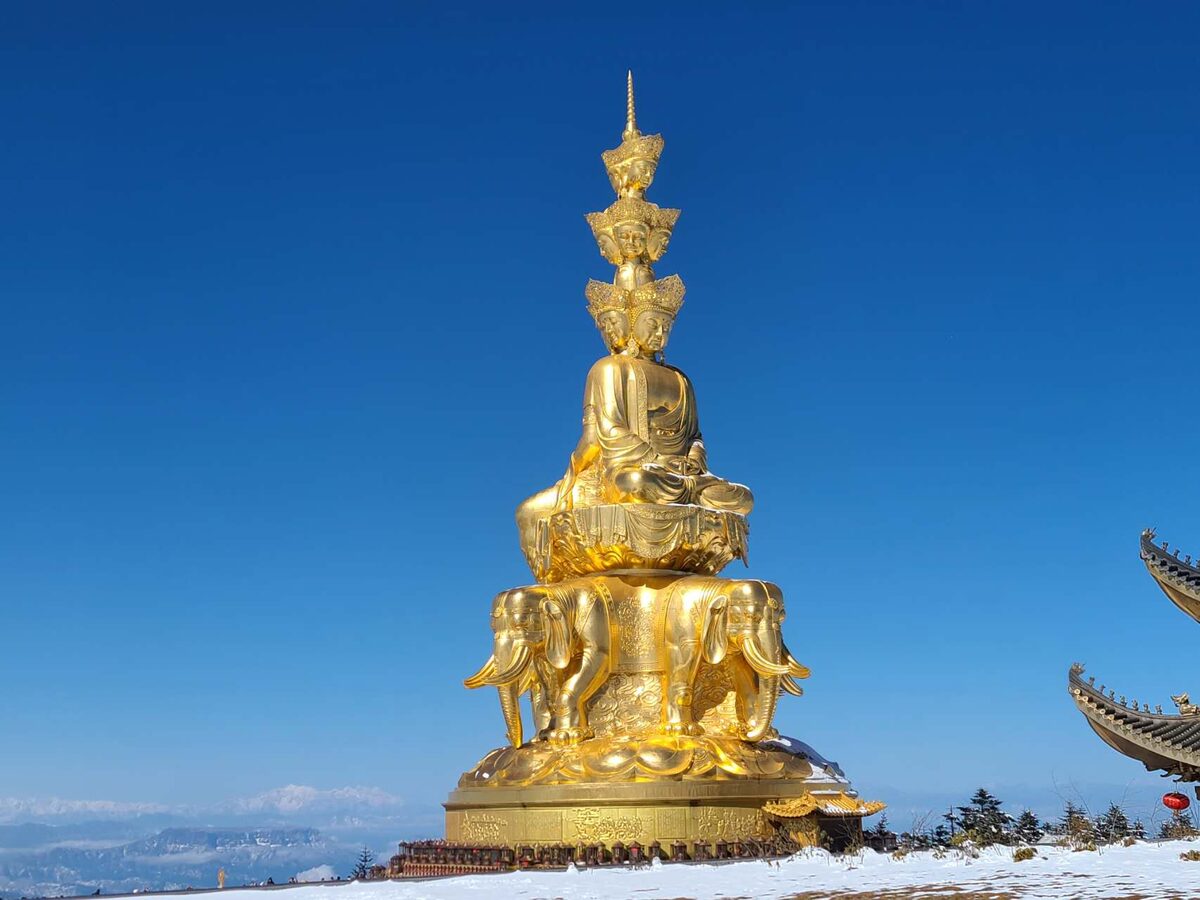
Overview: One of the Four Sacred Buddhist Mountains of China, this 3,099-meter peak in western Sichuan has been a center of Buddhist worship for nearly two thousand years and is recognized as a UNESCO World Heritage site for both its cultural and natural significance.
Highlights: The Golden Summit (Jinding) with its 48-meter golden statue of Samantabhadra overlooking a rolling sea of clouds; the ancient Baoguo Temple at the mountain’s base; the playful Tibetan macaques that inhabit the middle slopes; and the spectacular sunrise, when the eastern horizon glows red above a billowing white ocean below.
Strategy: Take the bus to the Leidongping transfer station, then a short cable car to the Golden Summit for sunrise the next morning. The summit is at altitude, so ascend in stages, rest well at the half-way hotels, and avoid the heavy monsoon months of July and August when cloud cover obscures the views.
05 · Cliff Face
Leshan Giant Buddha
乐山大佛
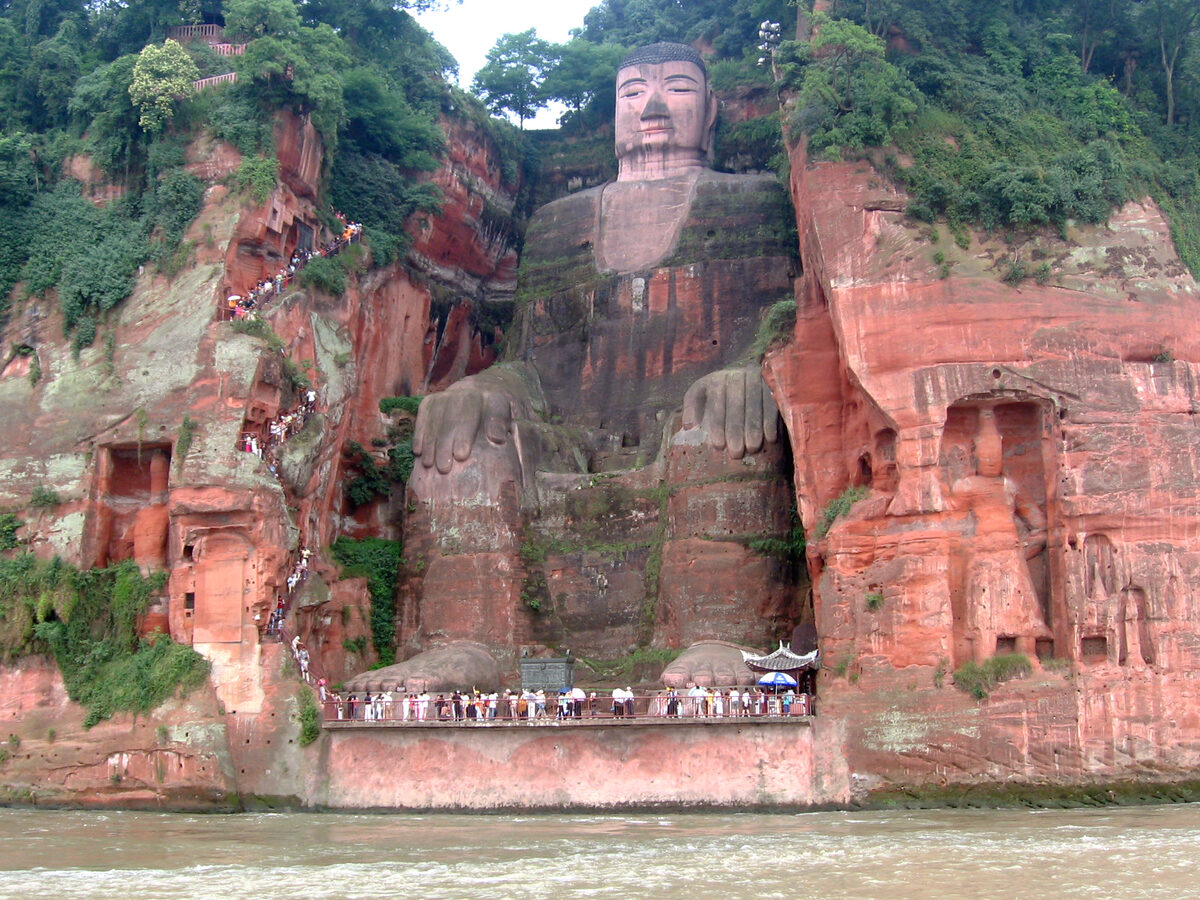
Overview: Carved between 713 and 803 CE during the Tang dynasty at the confluence of the Min, Dadu, and Qingyi rivers, this 71-meter seated Maitreya is the largest stone Buddha in the world and a UNESCO World Heritage site jointly inscribed with Mount Emei.
Highlights: The 1,021 coiled hair buns on the Buddha’s head, each individually carved and designed to channel rainwater away from the body; the 28-meter-tall instep that can seat a hundred people; the drainage system hidden within the sculpture that has helped preserve it for over a millennium; and the river-island viewpoint that captures the Buddha at full scale against the cliff face.
Tip: The original nine-turn plank walkway down the cliff has been replaced by a safer staircase, but the queues are still long. Take the river cruise from Leshan Port for a serene water-level perspective, then walk the Buddha’s head, body, and feet from the Lingyun Temple side for a complete top-to-base reading.
06 · Living Engineering
Dujiangyan Irrigation System
都江堰
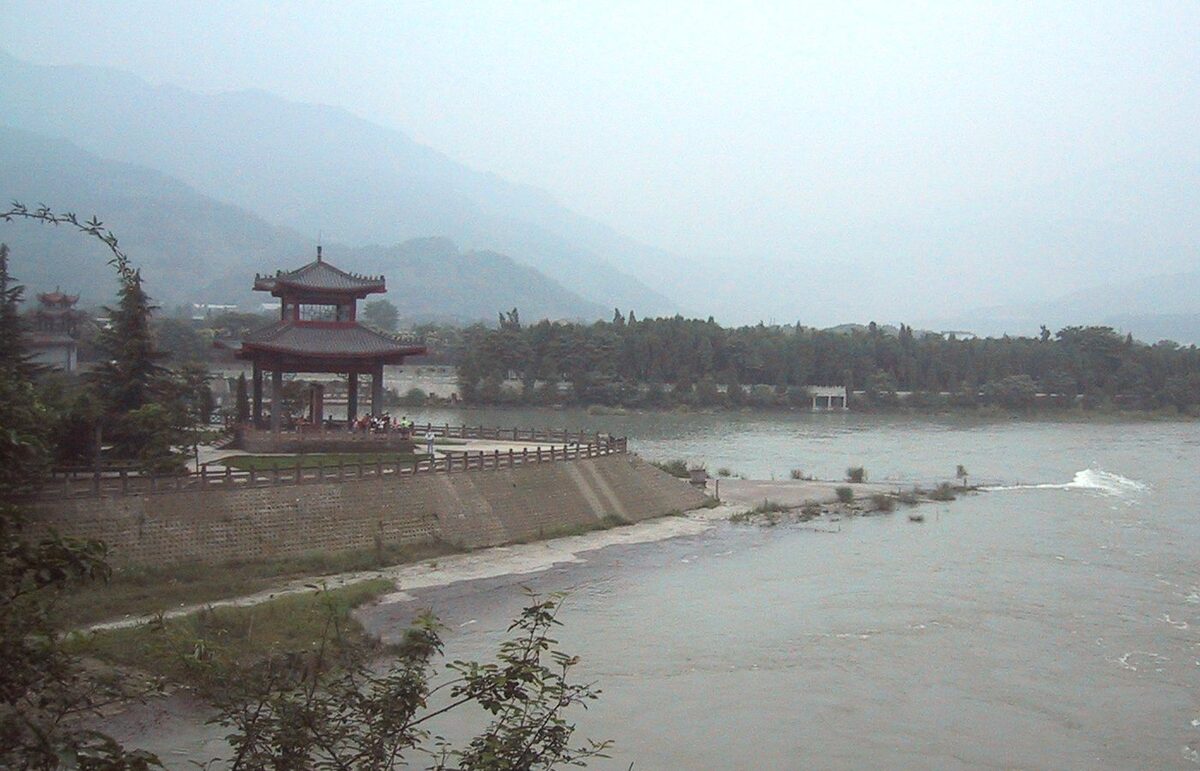
Overview: Designed by the Qin-era engineer Li Bing and his son in 256 BCE, this gravity-fed water diversion system on the upper Min River is the oldest still-functioning large-scale hydraulic project in the world, and a UNESCO World Heritage site since 2000.
Highlights: The Fish-Mouth Levee (Yuzhui), a rock-fill mid-stream dike that splits the Min River into an inner channel and an outer flood channel; the Feisha Weir, a low overflow dam that drains silt during the annual flood season; the Baopingkou, a narrow man-made gorge that meters water into the Chengdu Plain irrigation grid; and the Anlan Suspension Bridge, a centuries-old iron-chain footbridge that has linked the two banks for over 300 years.
Strategy: Walk the system in a half-day loop starting at the Erwang Temple, dedicated to Li Bing, then follow the levee upstream to the Fish-Mouth Levee viewpoint, cross the Anlan Bridge, and finish at the Lidui Park, where the park’s museum explains the physics of a dam-less diversion. Spring, when the Baopingkou is released for flood control, is the most dramatic time to see the system in action.
07 · Bronze Mystery
Sanxingdui Museum
三星堆博物馆
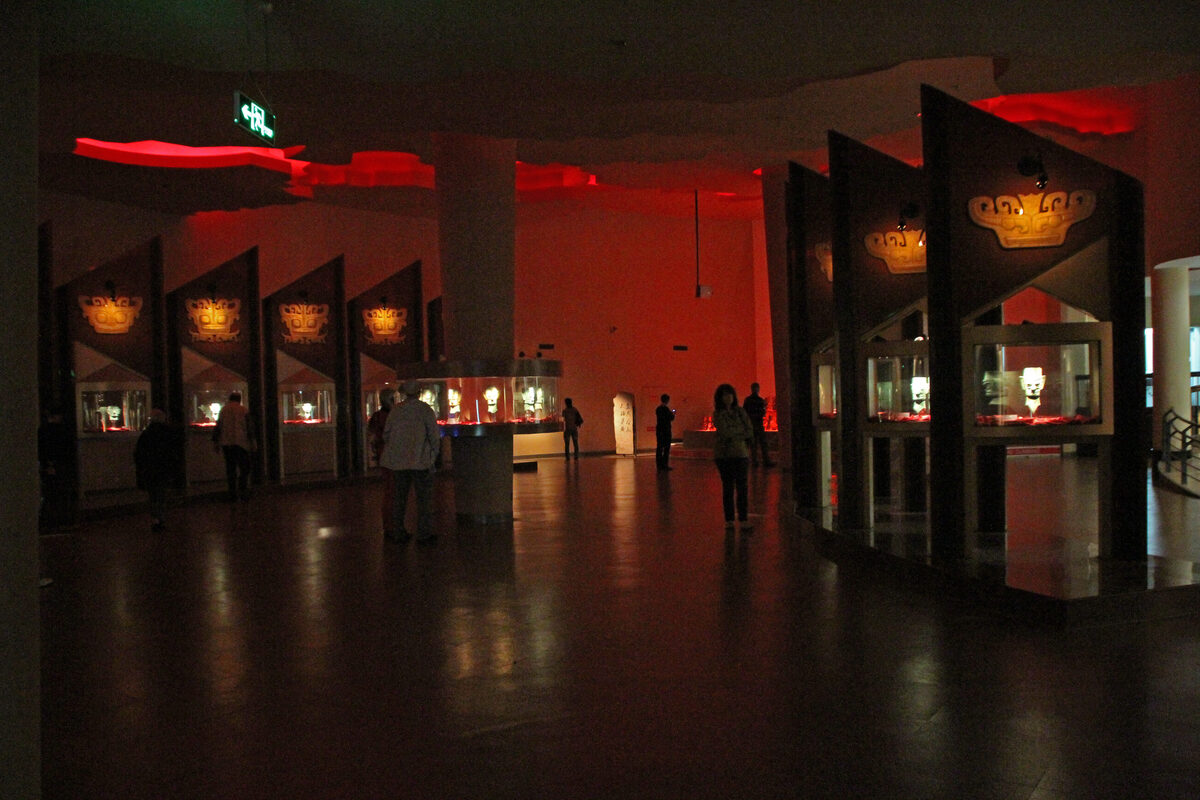
Overview: A purpose-built museum opened in 1997 and expanded in 2023 on the outskirts of Guanghan, presenting more than 1,500 artifacts from a Bronze Age culture that flourished in the upper Yangtze basin for over two thousand years before disappearing around 1100 BCE.
Highlights: The 1.38-meter bronze standing figure, the largest complete bronze human statue from any prehistoric civilization worldwide; a 4-meter bronze sacred tree with descending birds and dragons, a unique motif in world art; the bronze masks with protruding eyes that have become the museum’s signature image; and a 3-meter jade cong and a 60-kilogram gold scepter that redefine what we thought prehistoric Sichuan was capable of producing.
Tip: Two new excavation pits have been preserved under glass inside the museum’s modern wing, allowing visitors to watch archaeologists at work on finds that are still being studied. Allow at least three hours, and pair the visit with a stop at the open-air Jinsha Site Museum back in central Chengdu for the cultural context that links Sanxingdui to the later Shu civilization.
Plan a private Sichuan journey
Tell us your dates and travel style — we will craft a thoughtful itinerary around Sichuan’s natural wonders, living traditions, and the fiery cuisine of the southwest.