

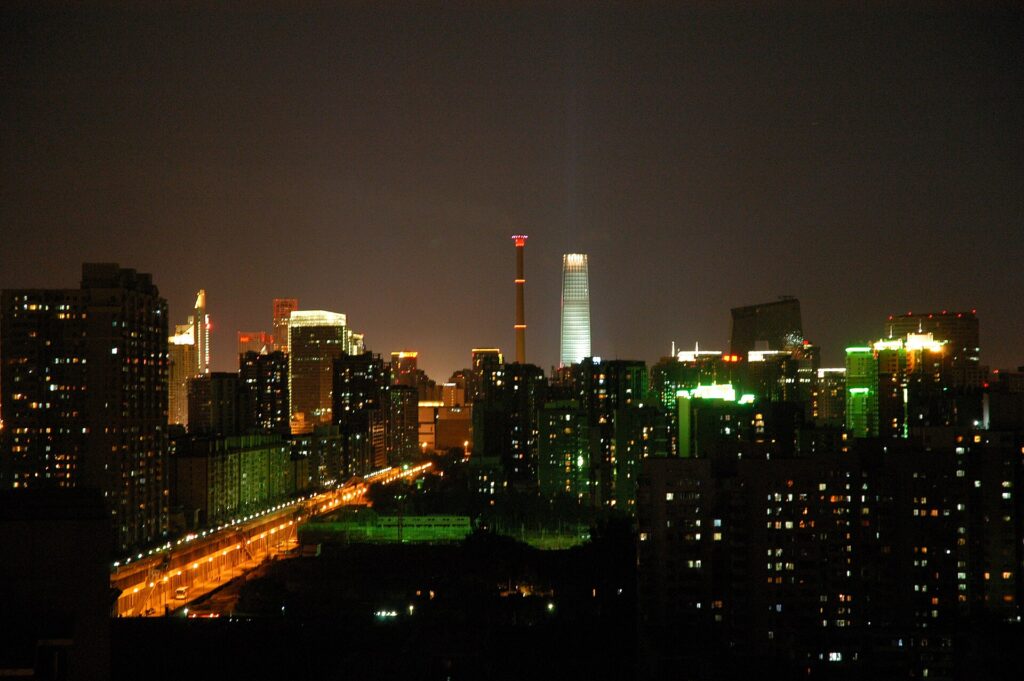
Beijing
Magazine-style destination guide
Beijing is a city where imperial ceremonial spaces, classical gardens, sacred temples, historic hutongs, and cutting-edge Olympic architecture unfold along a powerful central axis. Its scale is monumental, yet the most memorable moments often come from details: glazed roofs at sunset, cypress-lined paths, lakeside lanterns, and courtyards filled with incense.
This guide follows nine defining chapters of the capital, from the Forbidden City and the Great Wall to the Temple of Heaven, Summer Palace, Lama Temple, Shichahai, Jingshan, Yuanmingyuan, and the Olympic Park.
01 · Imperial Axis
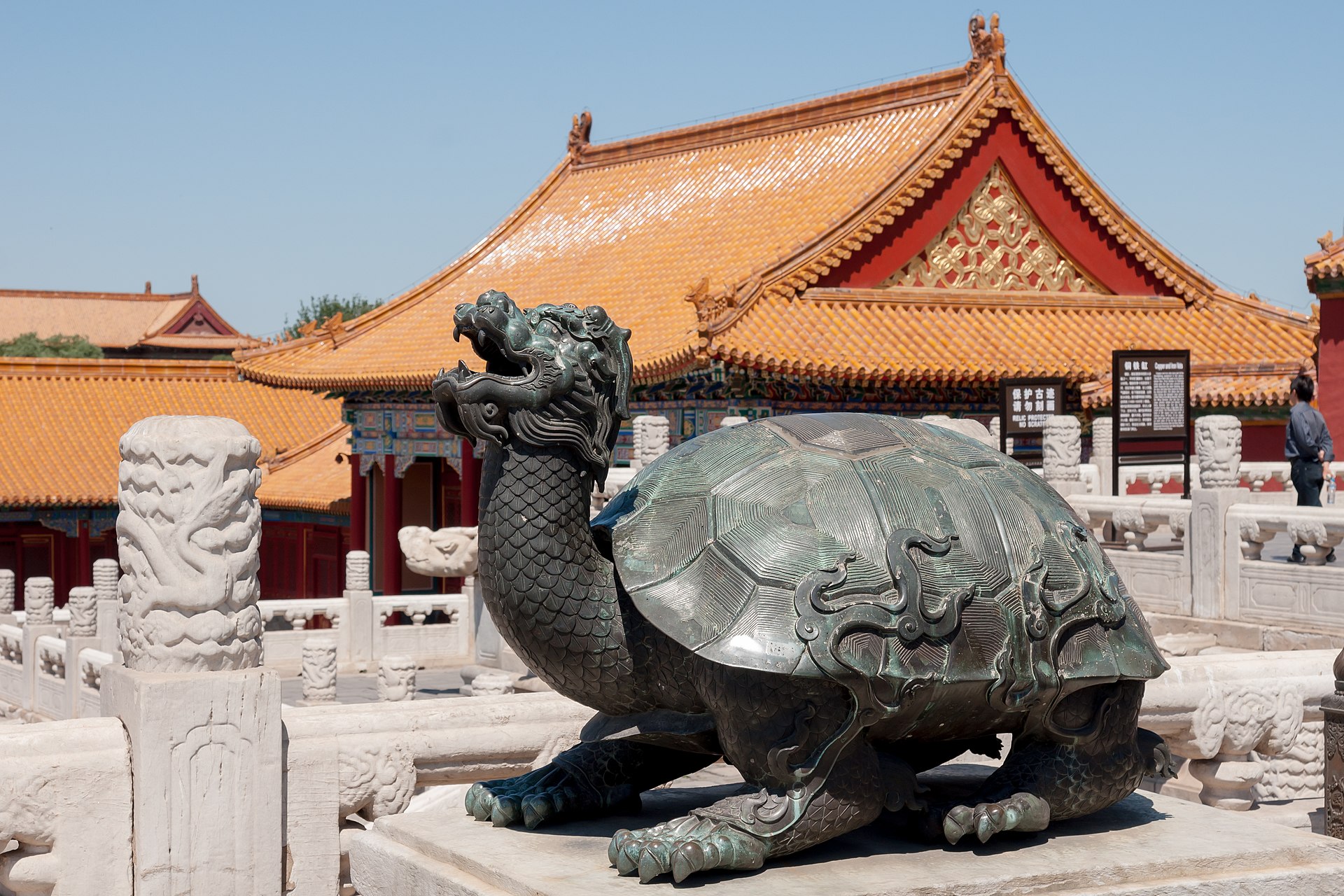
The Forbidden City
故宫博物院 / 紫禁城
Overview: Commissioned in 1406 during the Ming Dynasty, this UNESCO World Heritage Site served as the supreme seat of imperial governance and residence for 24 emperors across the Ming and Qing dynasties. Covering 72 hectares, it is the world’s largest and best-preserved ancient wooden palace complex.
Highlights: The monumental central axis centered on the Three Great Halls (Hall of Supreme Harmony, Hall of Central Harmony, and Hall of Preserving Harmony), radiant yellow-glazed roofs, crimson walls, and exquisite imperial artifacts inside the Treasure Gallery and Clock Gallery.
Strategy: Book admission strictly 7 days in advance at 8:00 PM via the official booking channel, as tickets sell out immediately. Entry is strictly one-way from South to North: enter through the Meridian Gate (Wumen) and exit via the Gate of Divine Prowess (Shenwumen).
02 · Mountain Ramparts
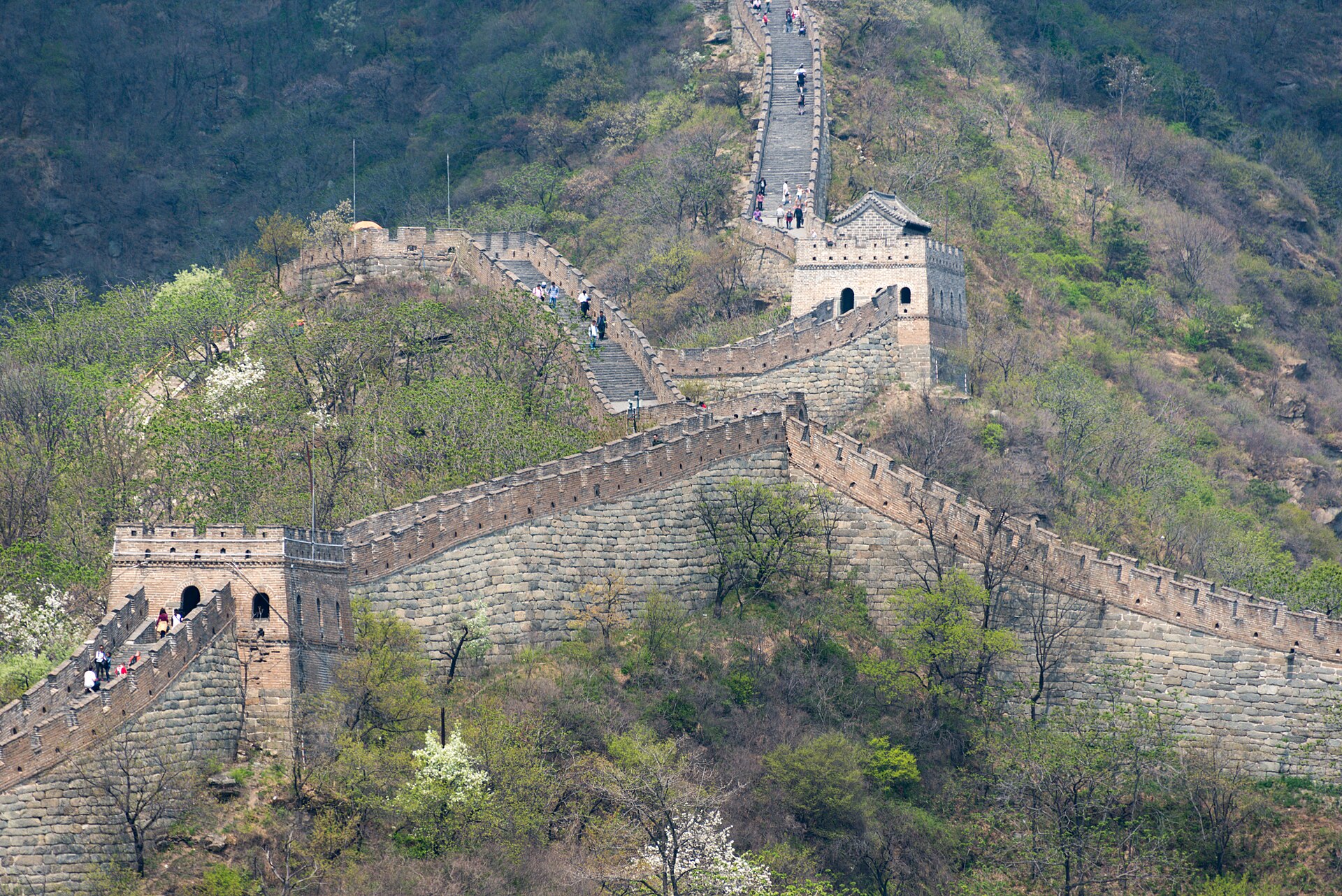
The Great Wall at Mutianyu & Badaling
万里长城 / 慕田峪与八达岭
Overview: Dating primarily to the Ming Dynasty (1368–1644) in the Beijing region, this immense defense network winds across rugged mountain ridges, standing as one of humanity’s most monumental architectural feats.
Highlights: Fortified stone ramparts, soaring mountain vistas, and preserved watchtowers. Badaling delivers sheer historical drama with convenient high-speed rail access, while Mutianyu offers over 96% forest coverage, fewer crowds, and a pristine natural setting.
Signature Experience: Taking the cable car up to Watchtower 14 or the chairlift to Watchtower 6 at Mutianyu, hiking along the winding granite parapets to Watchtower 20, and riding the gravity-fed alpine toboggan chute down the mountain.
03 · Sacred Architecture
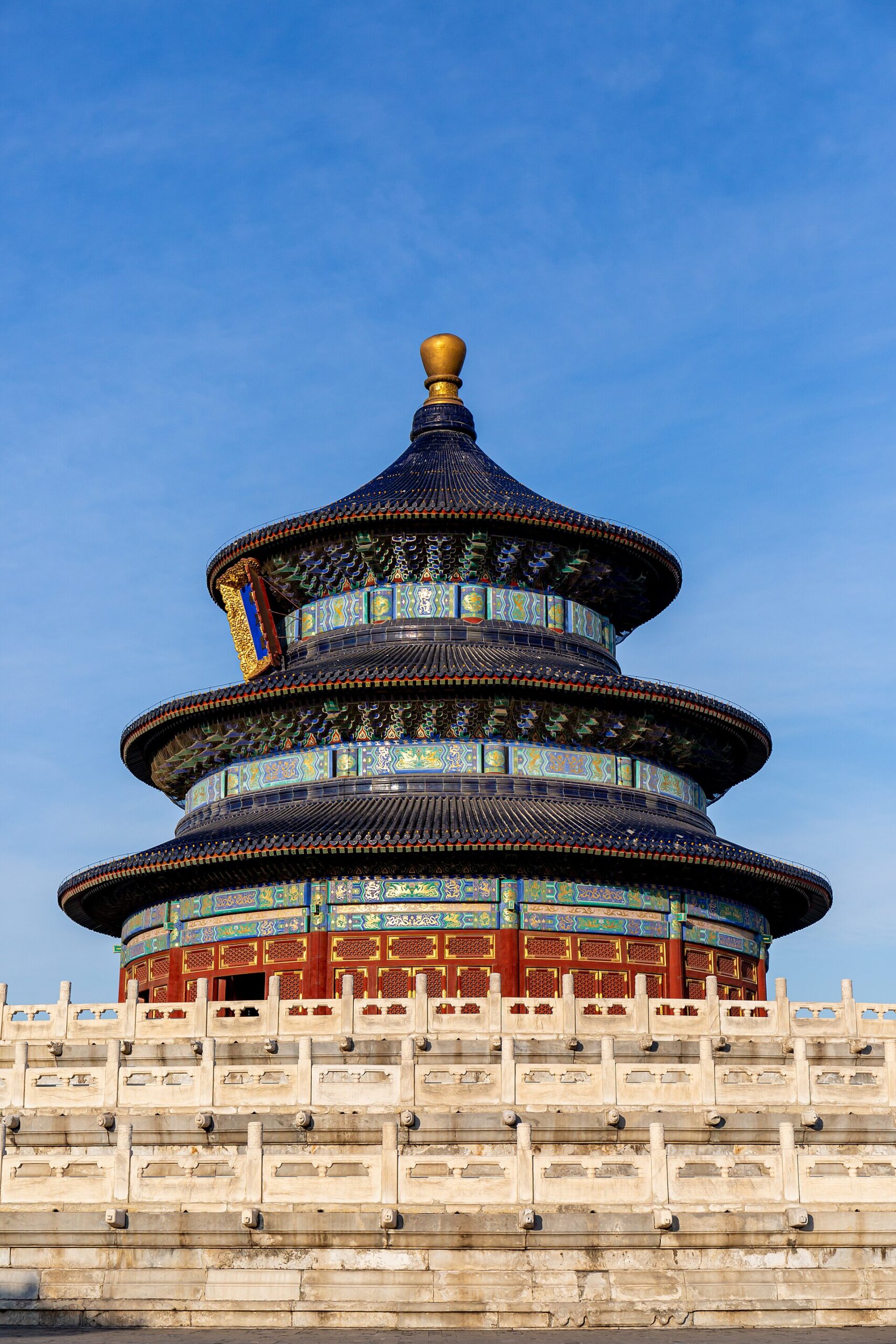
The Temple of Heaven
天坛公园
Overview: Constructed in 1420, this 273-hectare imperial sacrificial complex is where Ming and Qing emperors performed solemn winter solstice ceremonies, fasting and offering sacrifices to heaven for peace and abundant harvests.
Highlights: The iconic Hall of Prayer for Good Harvests—a three-tiered circular wooden rotunda built entirely without nails or crossbeams and crowned by cobalt-blue glazed tiles representing the heavens. Other key structures include the Circular Mound Altar and the acoustically intriguing Echo Wall.
Best Time to Visit: Arrive between 7:30 AM and 8:30 AM. Before the tourist crowds arrive, you can stroll under centuries-old cypresses to witness local retirees practicing Tai Chi, shuttlecock kicking, water calligraphy, and traditional choral singing.
04 · Imperial Garden
The Summer Palace
颐和园
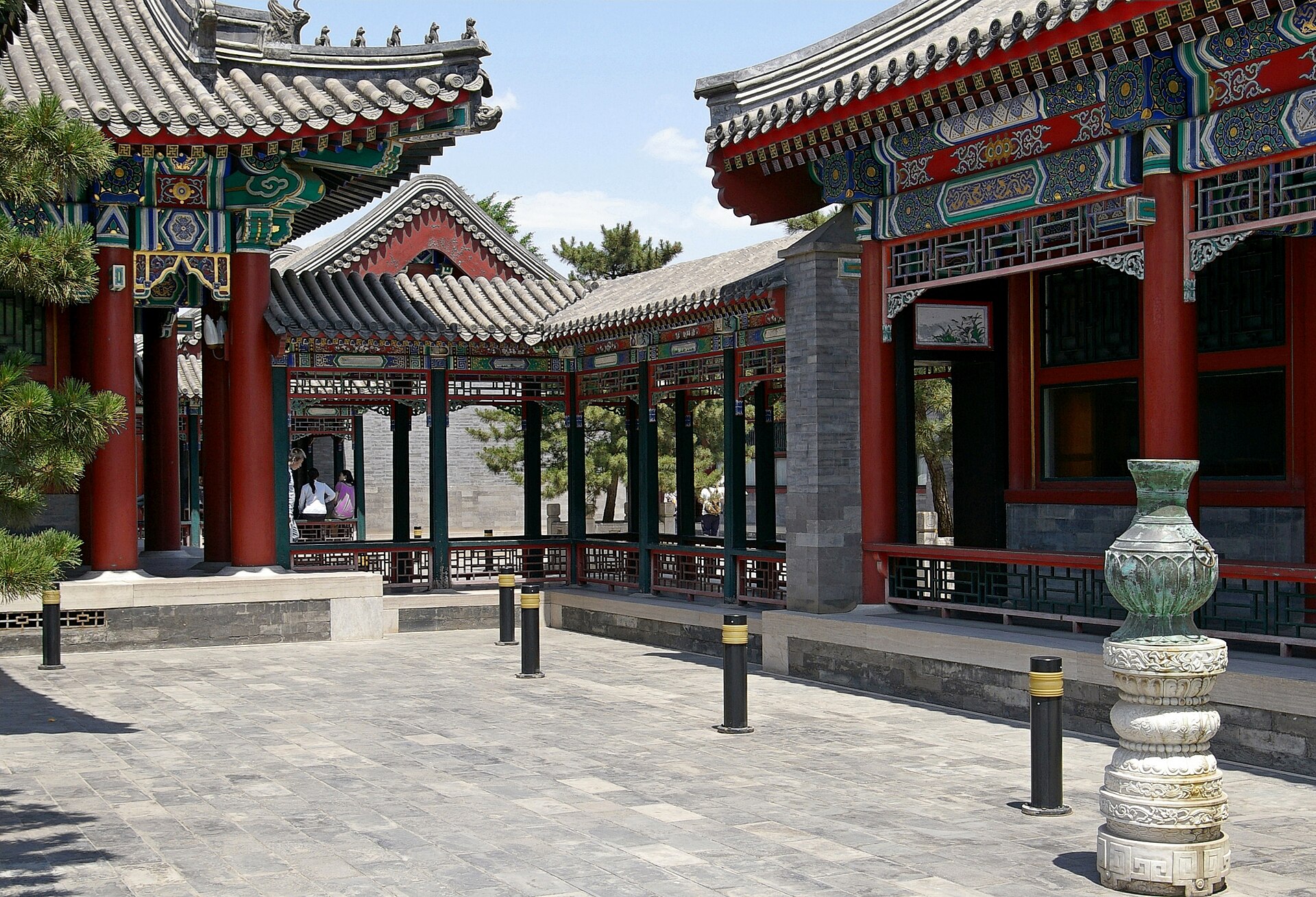
Overview: Originally constructed in 1750 and later expanded by Empress Dowager Cixi, this 300-hectare retreat is the pinnacle of Chinese landscape garden design, harmonizing Longevity Hill with the calm expanses of Kunming Lake.
Highlights: The 728-meter Long Corridor decorated with over 14,000 distinct hand-painted folk and historical scenes, the hillside Tower of Buddhist Incense, the marble-and-glass Stone Boat, and the sweeping Seventeen-Arch Bridge.
Tip: In mid-to-late December, photographers gather along the eastern shore to witness the famous “golden light piercing the arches” (金光穿洞) as the low winter sunset illuminates the underside of all seventeen arches. During warmer months, take an electric pedal boat across Kunming Lake for panoramic views of the Western Hills.
05 · Living Faith
The Yonghe Temple / Lama Temple
雍和宫
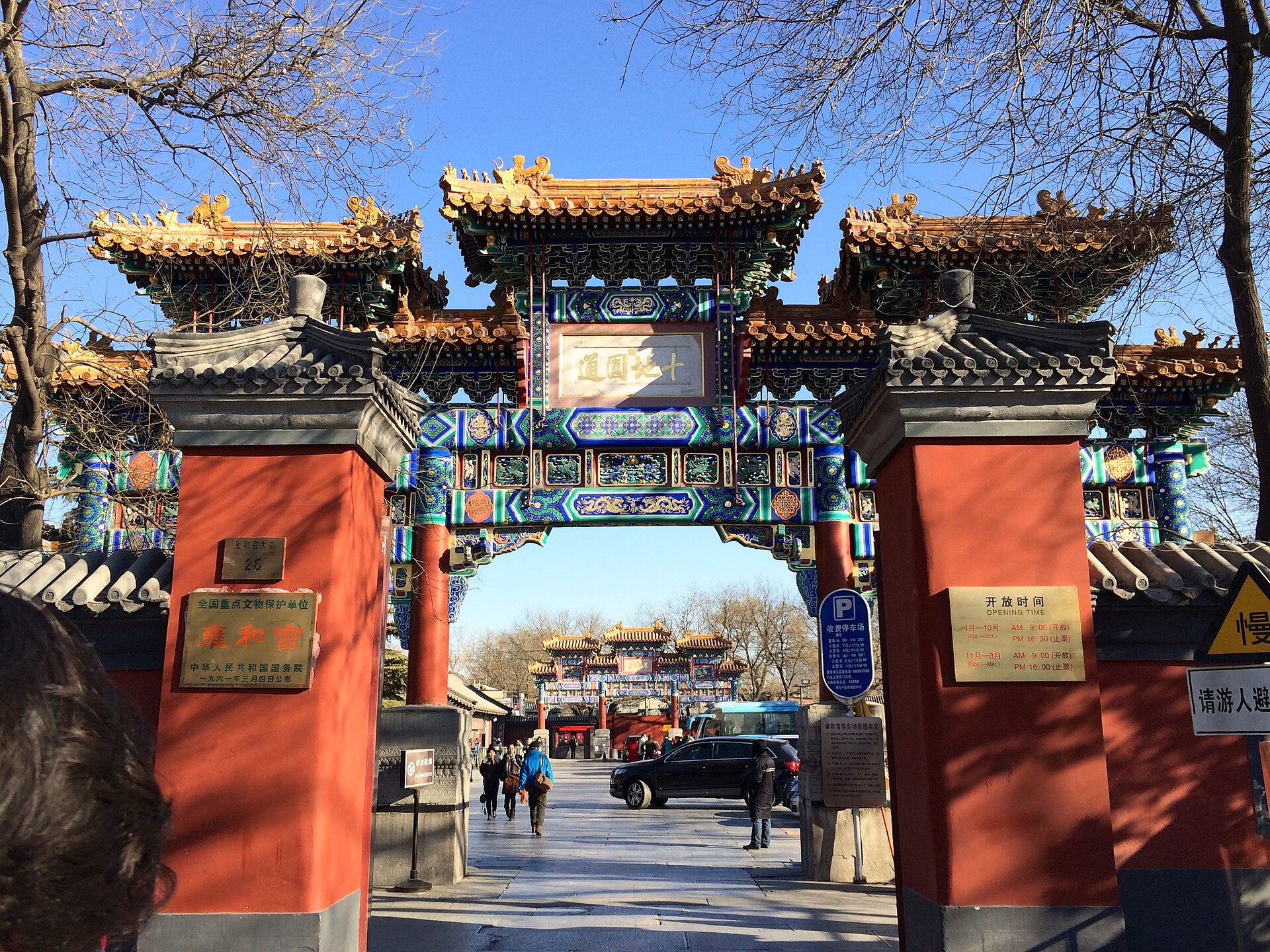
Overview: Built in 1694 as the residence of Prince Yong (who later reigned as Emperor Yongzheng), this complex was converted into an imperial Tibetan Buddhist monastery in 1744. Today, it remains Beijing’s highest-ranking Gelug sect lamasery.
Highlights: A harmonious blend of Han, Manchu, Mongolian, and Tibetan architectural styles across five ascending courtyards, housing precious bronze incense burners, ornate thangka tapestries, and vibrant prayer wheels.
Signature Experience: Entering the Wanfu Pavilion to stand before the colossal 18-meter-tall statue of Maitreya Buddha, meticulously carved from a single continuous trunk of white sandalwood and certified by Guinness World Records.
06 · Hutong Waters
Shichahai Lakes & The Drum and Bell Towers
什刹海与钟鼓楼
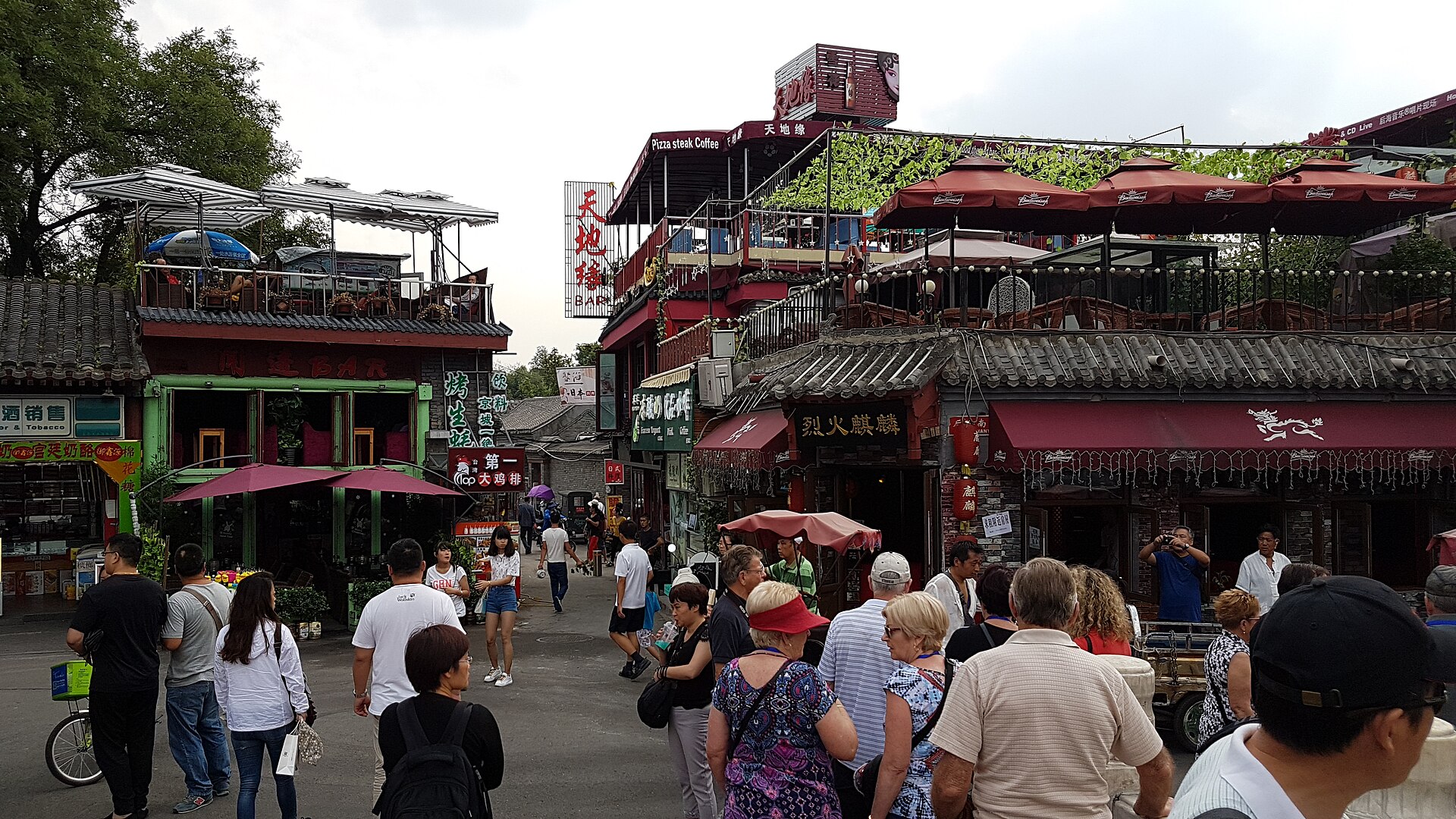
Overview: A historic water basin comprising Qianhai, Houhai, and Xihai that served as the bustling northern terminus of the Grand Canal during the Yuan Dynasty, framed by authentic hutong alleyways, traditional courtyard houses, and Prince Gong’s Mansion.
Highlights: The historic Drum and Bell Towers marking the northern anchor of Beijing’s Central Axis, which once regulated the entire capital’s daily schedule with rolling drumbeats and ringing bells.
Atmosphere: Strolling along Yandaixiejie (Skewed Tobacco Pipe Lane) in late afternoon, taking a pedal boat across Houhai Lake, and savoring local mutton skewers, sugar-glazed hawthorns (Tanghulu), and tea snacks by the willow-draped waters as evening lanterns light up.
07 · Sunset Viewpoint
Jingshan Park
景山公园
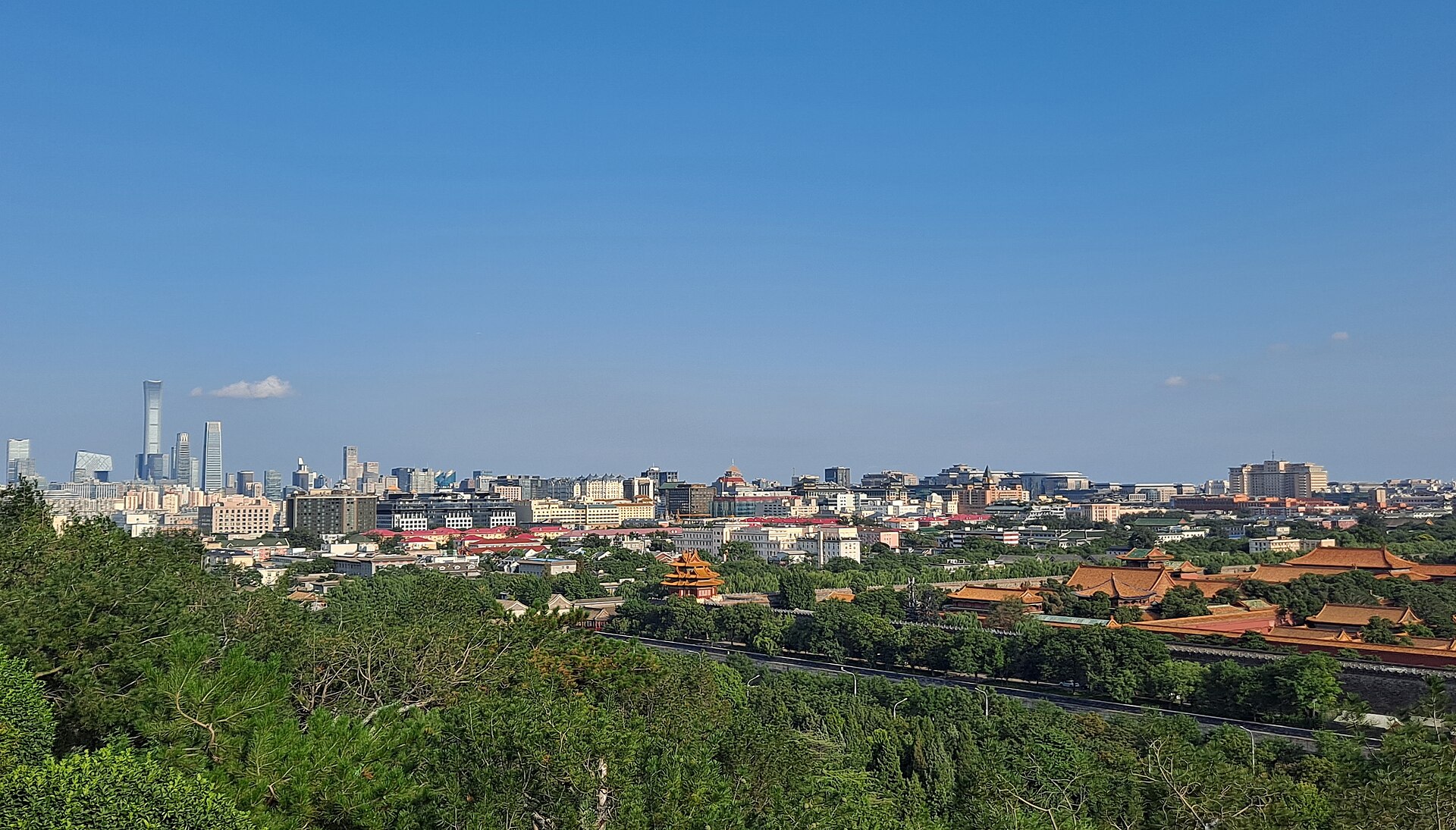
Overview: Located immediately north of the Forbidden City along Beijing’s central meridian, Jingshan is an imperial artificial hill formed entirely from the soil excavated to dig the Forbidden City’s palace moats during the Ming Dynasty.
Highlights: Wanchun Pavilion (Pavilion of Ten Thousand Springs) crowning the peak, functioning as the highest historical vantage point in central Beijing with an unobstructed 360-degree vista.
Best Time to Visit: Climb to the summit approximately 40 minutes before sunset. Watching the golden late-afternoon sun bathe the vast ocean of Forbidden City glazed tile roofs, before framing the symmetrical axis toward the Drum and Bell Towers to the north, is Beijing’s definitive postcard shot.
08 · Ruined Splendour
The Old Summer Palace / Yuanmingyuan
圆明园遗址公园
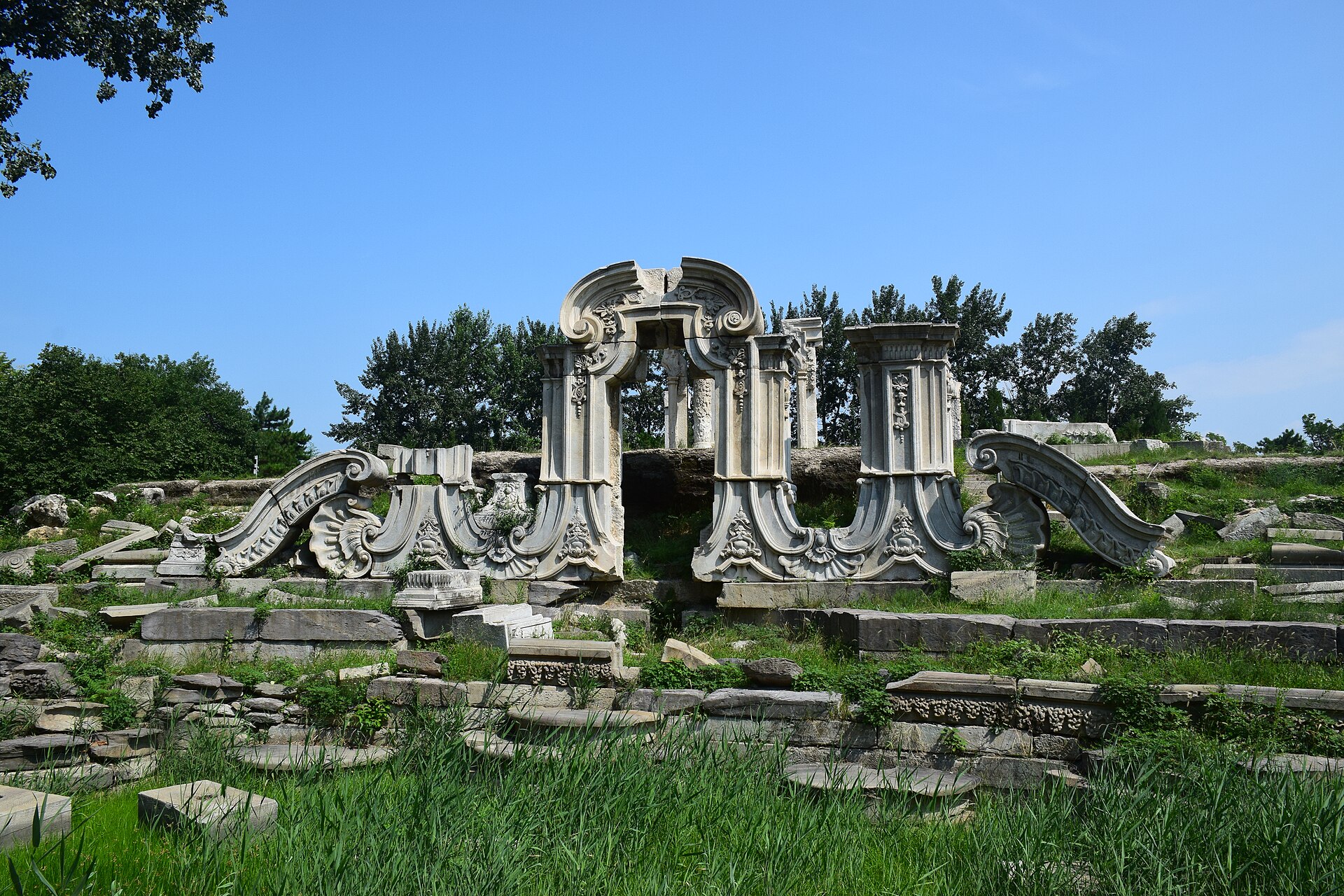
Overview: Once hailed as the “Garden of Gardens,” Yuanmingyuan spanned 350 hectares of imperial grounds blending classical Chinese waterscapes with ornate European Rococo palaces before it was looted and incinerated by Anglo-French forces in 1860.
Highlights: The Western Mansions (Xiyanglou) stone ruins, where massive carved marble architraves and the remains of Dashuifa (Grand Waterworks) stand as a poignant open-air testament to modern history.
Tip: The park area is massive. Purchase the combo ticket (including the core Western Mansions ruin zone) and save energy by utilizing the internal shuttle carts or the electric canal boats across Fuhai Lake.
09 · Modern Beijing
Beijing Olympic Park: Bird’s Nest & Water Cube
奥林匹克公园:鸟巢与水立方
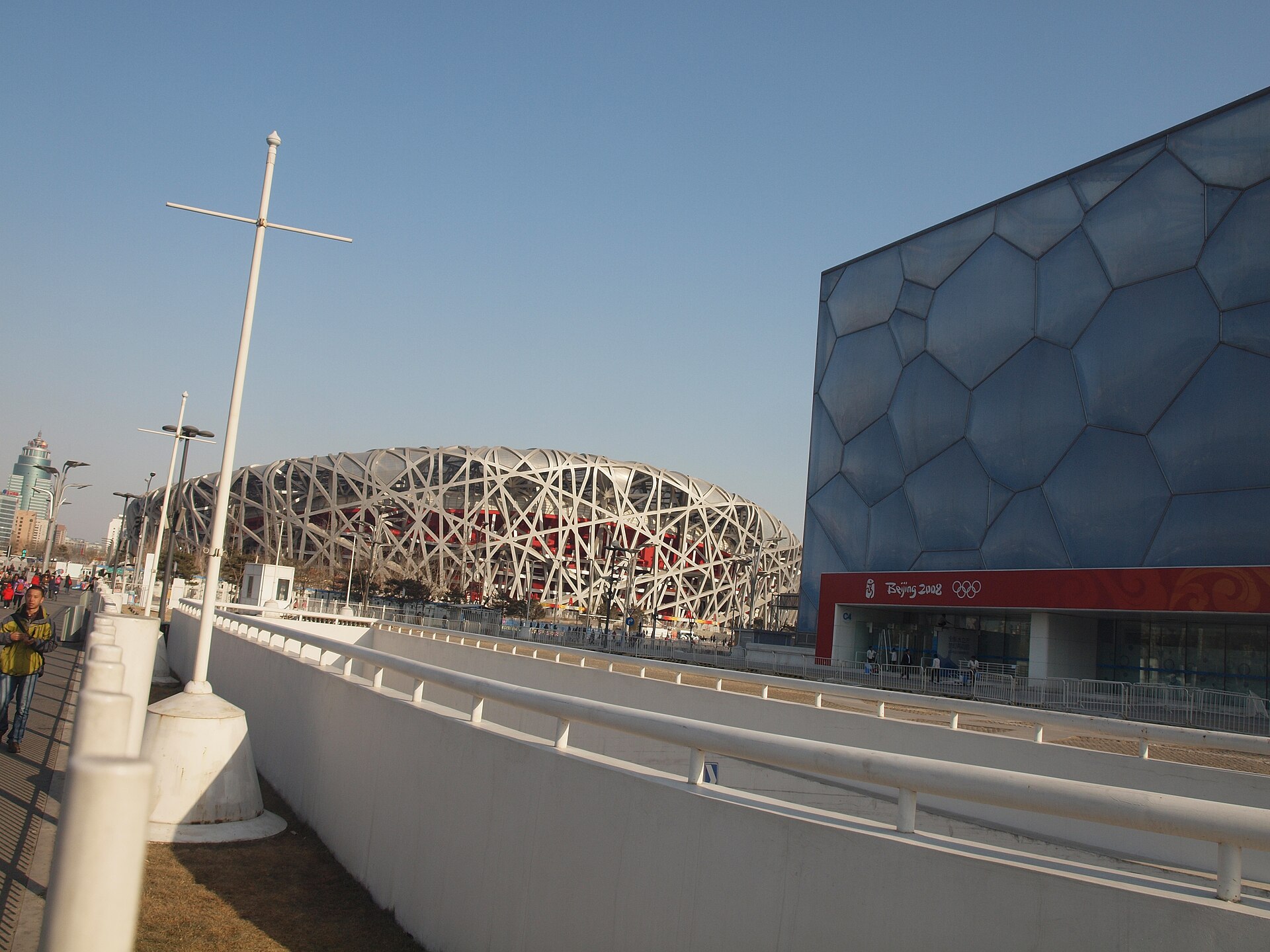
Overview: Anchoring the northern extension of the Central Axis, this modern sports complex marks Beijing’s historic status as the world’s first “Dual Olympic City,” having hosted both the 2008 Summer Games and the 2022 Winter Games.
Highlights: The National Stadium (“Bird’s Nest”), an engineering masterpiece woven from 42,000 tons of raw steel latticework, and the adjacent National Aquatics Center (“Water Cube / Ice Cube”), wrapped in glowing, translucent ETFE air-bubble membranes.
Strategy: Visit after dusk (post-7:00 PM) when the structures light up in glowing crimson and aquatic blue illuminations, creating a vibrant visual dialogue between traditional Chinese cosmological symbols (round heaven and square earth) and cutting-edge modern design.
Plan a private Beijing journey
Tell us your dates and travel style — we will craft a thoughtful itinerary around Beijing’s imperial, cultural, and modern highlights.
Enquire Now